

 Facebook
 X
 Pinterest
 Copy Link
Greater Seattle and King County Housing Market
A Seasonal Slowdown, or Something More?
October’s real estate statistics continue the trends we saw in September. While the housing market normally slows during the fall and winter months, this year’s slowdown appears more pronounced than the typical seasonal cycle.
As a REALTOR®, I spend a considerable amount of time reading, studying, and comparing market data. This month, I am sharing a collection of reports from several different sources.
What’s interesting is how consistently these reports point to similar trends in the Greater Seattle housing market. At the same time, some areas of the country continue to experience stronger market conditions.
Once again, this reinforces something I frequently emphasize: All real estate markets are local.
Even within King County, market conditions can vary significantly from one neighborhood to another.
Looking at the Numbers: Northwest Multiple Listing Service (NWMLS)
Let’s start with the October statistics from the Northwest Multiple Listing Service (NWMLS).
Real estate activity follows a predictable annual cycle. Listings and sales tend to increase in the spring, remain active through the summer, and slow as we move into fall and winter. Looking at the five-year history of active listings in King County, the seasonal pattern still appears relatively normal year to year.
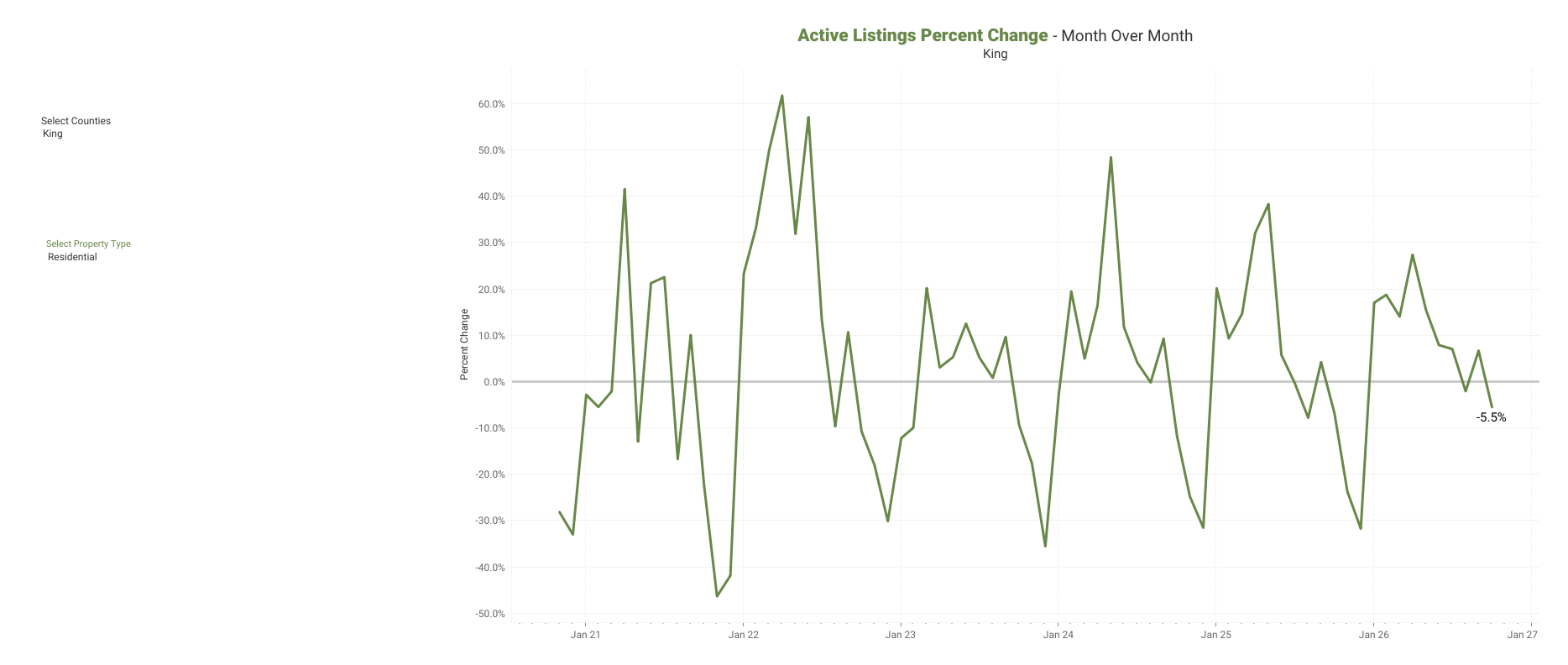
However, when we look beyond the seasonal patterns and examine pending sales, we begin to see a different picture.
Pending Sales: A Leading Indicator
Pending sales are one of the statistics I watch closely. A pending sale means a property is under contract, but the transaction has not yet closed. Because most pending sales eventually become closed sales, this provides a useful indicator of what we might expect in the coming weeks.
In October 2026, King County residential pending sales declined 15.6% year over year.
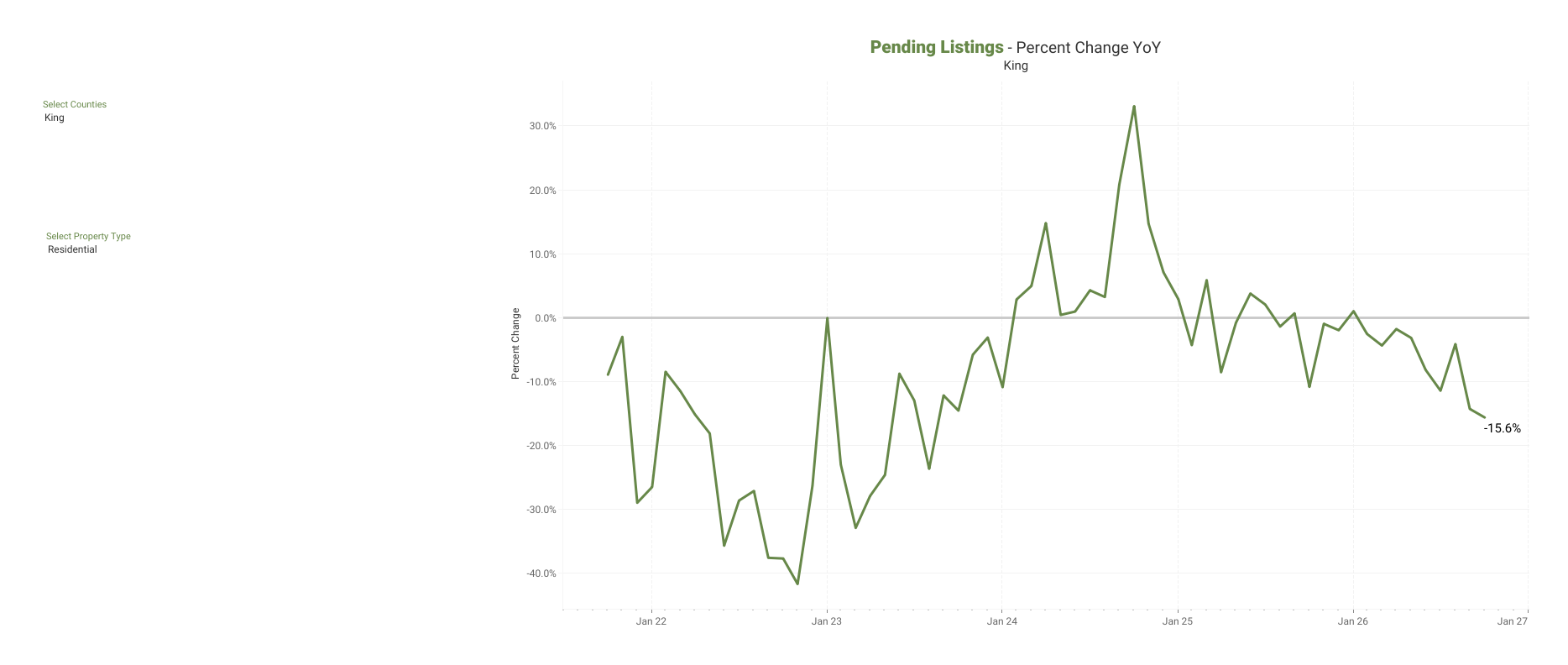
That is a significant decline.
Fewer homes going under contract can translate into fewer closed transactions in the following months. When sales activity slows, homes may remain on the market longer, contributing to higher inventory levels.
For buyers, this may mean more choices and additional negotiating opportunities. For sellers, it reinforces the importance of competitive pricing, preparation, and understanding the local market.
Inventory Continues to Increase
Another important measurement is months of inventory, sometimes called months of supply.
This tells us approximately how long it would take to sell the homes currently available if sales continued at the present pace and no additional homes were listed.
For October, King County reported:
• Residential homes: 3.7 months of inventory
• Condominiums: 7.0 months of inventory
The difference is important. The condominium market is experiencing considerably more inventory relative to sales activity than the residential market.
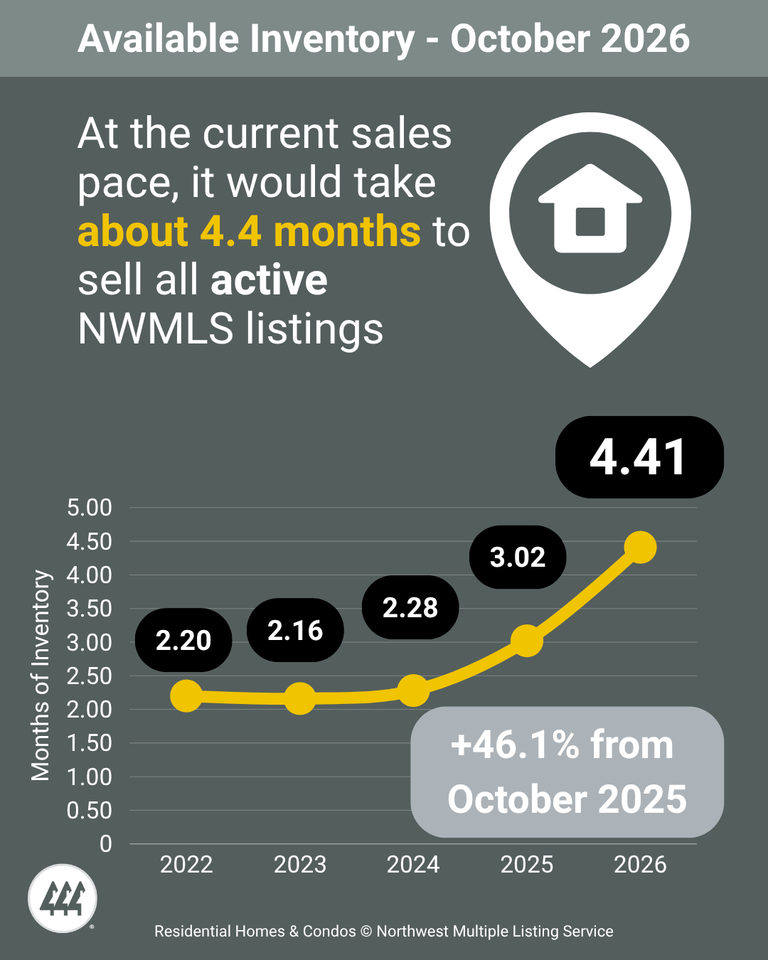
More inventory generally gives buyers additional choices and negotiating leverage. However, this doesn’t mean every property or neighborhood is experiencing the same conditions.
A well-priced, well-presented home in a desirable location can still attract strong interest.
You can explore the full report and individual county statistics here:
(NWMLS – October Market Report https://www.nwmls.com/real-estate-news/monthly-market-snapshot/)
NWMLS October Market Video
NWMLS also produced a helpful video summarizing the October results.
A National Perspective: National Association of REALTORS®
Melissa Dittmann Tracey, writing for the National Association of REALTORS® (NAR), offers an interesting perspective on the current national housing market.
Her November report describes how higher mortgage rates have encouraged many buyers to wait, reducing transaction activity.
However, there is another side to this story.
Many existing homeowners have accumulated substantial equity over the years. Distressed sales remain near historic lows, giving many sellers financial flexibility that may not have existed during previous housing downturns.
That is an important distinction.
A slowing market does not automatically mean a distressed market.
Homeowners with significant equity may have more flexibility in deciding when to sell, what price to accept, and how to negotiate.
Read the NAR article: Home Sales Slow as Buyers Adjust to Elevated Mortgage Rates
Realtor.com Market Clock: Where Are We Now?
Another interesting way of looking at market conditions is the Realtor.com® Market Clock®.
This report examines housing market conditions across the largest metropolitan areas in the United States and places them on a 12-hour clock to illustrate whether markets favor buyers, sellers, or are relatively balanced.
In the third-quarter 2026 report, both the national housing market and the Seattle-Tacoma-Bellevue metropolitan area were positioned at:
4 o’clock: Late Balanced, Moving Toward a Buyer’s Market.
This is consistent with what we are seeing in the NWMLS statistics: increasing inventory, fewer pending sales, and additional negotiating opportunities for buyers.
However, the Market Clock also illustrates how different conditions are across the country. Some metropolitan areas remain relatively favorable to sellers, while others have moved further toward buyers.
It’s another reminder that national trends don’t tell the entire story.
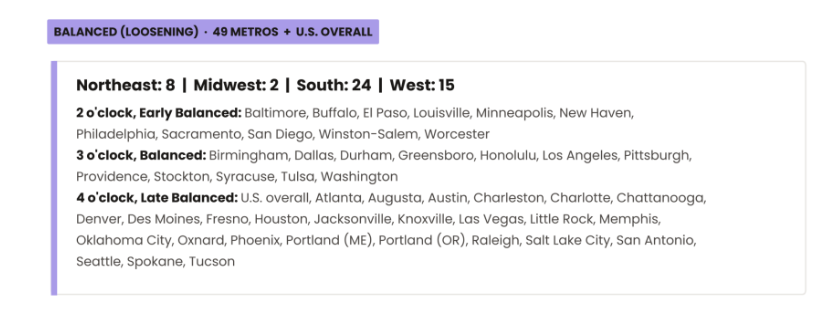
Explore the Realtor.com Market Clock Report
What Are Real Estate Agents Seeing Across the Country?
Another source I follow is John Burns Research and Consulting, which produces a monthly Real Estate Agent Survey.
Unlike reports based solely on completed transactions, this research also collects feedback from real estate professionals about what they are experiencing in the market.
The October survey provides some interesting insights into buyer activity.
According to the survey, 59% of buyers were moving from homes they previously owned. Meanwhile, 28% came from rental properties or living with family, compared with 49% in 2022.
These figures suggest that existing homeowners, including move-up and higher-end buyers, are playing a larger role in current market activity, while first-time buyers continue to face affordability challenges.
Another chart shows a brief improvement in market sentiment during the summer, followed by renewed weakness. The Northwest region registered a reading of 25 on the survey’s index.
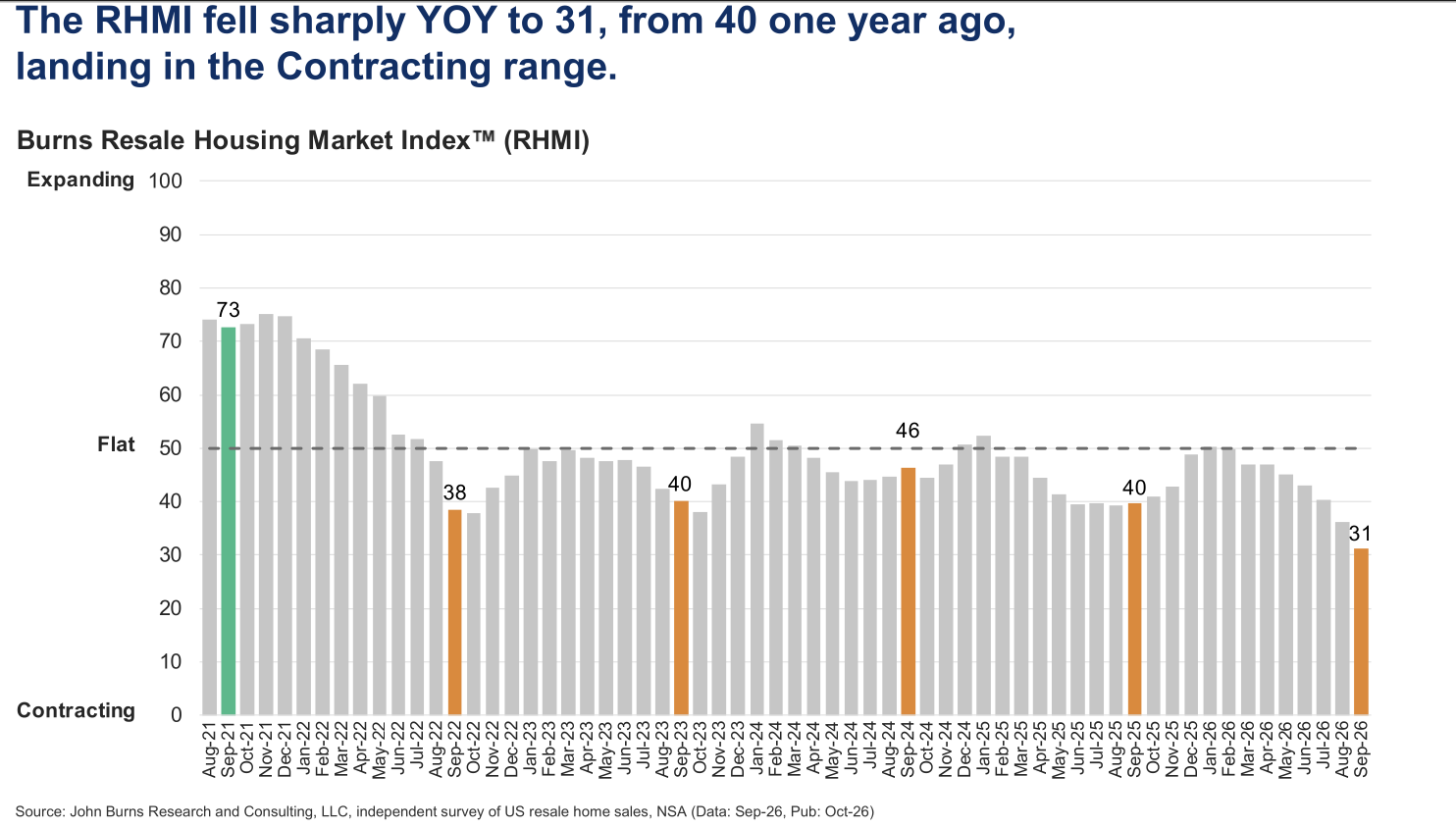
I find this report particularly interesting because it reflects what real estate professionals are observing directly, not just what appears in the final sales statistics.
When survey results and transaction data point in the same direction, they provide a more complete picture of the market.
Century 21: What Are Sellers Thinking?
One final report worth discussing is the Century 21 2026 Home Seller Confidence Report, which was also discussed by Century 21 CEO Mike Miedler on CNBC.
The findings highlight several important points about today’s sellers.
First, seller confidence remains relatively strong, even as market conditions become more challenging.
Second, life circumstances continue to drive real estate decisions. Retirement, family changes, job opportunities, downsizing, and changing housing needs don’t disappear because mortgage rates are higher.
And third, despite the growing popularity of artificial intelligence and online home valuation tools, sellers continue to place considerable trust in the knowledge and judgment of real estate professionals.
Technology can provide valuable information. However, understanding a property’s condition, location, competition, and the motivations of buyers and sellers requires much more than an automated estimate.
As someone who spent decades working in technology before becoming a REALTOR®, I find that distinction particularly interesting.
Good technology helps us make better decisions. It doesn’t replace experience, analysis, and thoughtful planning.
What Does All of This Mean for Buyers and Sellers?
And what if you’re both buying and selling?This is where things become particularly interesting. If you’re selling your current home and purchasing another, you may benefit from additional negotiating power when buying your next home. However, you may also need to offer similar flexibility to the buyer of your existing home.
You generally can’t expect to receive all the advantages of a buyer’s market when purchasing while also receiving all the advantages of a seller’s market when selling.
It works both ways.
The important question isn’t simply whether this is a good or bad market. It’s whether the current conditions work for your particular situation.
Looking Ahead
There are several factors that could change housing market conditions in the coming months and years.
Mortgage rates, economic conditions, housing supply, and potential changes in national housing policies could all influence where the market goes next.
I am also particularly interested in the longer-term demographic changes taking place in the United States.
As generations move through different stages of life, their housing needs change. Younger households are trying to enter the market, established homeowners may need more space, and older homeowners may be considering downsizing, aging in place, or other housing options.
These changes deserve attention, both from a broad economic perspective and at the individual family level.
For some homeowners, the house they once considered their forever home may no longer fit their needs.
That doesn’t always mean they need to sell. There may be options worth exploring, including remodeling, adding an Accessory Dwelling Unit (ADU), or considering a different type of property.
Final Thoughts
The reports I’ve shared this month come from different organizations, use different methods, and look at the housing market from different perspectives.
Yet they tell a remarkably consistent story.
The market is slowing, inventory has increased, and buyers are gaining negotiating opportunities. At the same time, many sellers remain financially secure, and well-positioned properties continue to attract interest.
The opportunity is in understanding how these conditions apply to your individual circumstances.
Whether you’re buying your first home, moving to something larger, downsizing, considering an investment property, or simply wondering what your options might be, it pays to look beyond the headlines.
Remember, all real estate markets are local. Even within the Greater Seattle area, conditions can vary significantly from neighborhood to neighborhood.
If you’re considering a real estate decision in the Greater Seattle or Eastside, I’d be happy to help you review the local data, explore your options, and develop a strategy that fits your goals.
David Koeger, REALTOR®, CSB+
Century 21 North Homes Realty
Your Strategic Real Estate Partner
References
-
Northwest
Multiple Listing Service – October 2026 Market Snapshot -
National
Association of REALTORS® – Home Sales Slow as Buyers Adjust to
Elevated Mortgage Rates -
John
Burns Research and Consulting – Real Estate Agent Survey,
October 20, 2026 -
Century
21 / Ipsos – 2026 Home Seller Confidence Research, November
2026


